How Serum Albumin Alters the Anion Gap and Calculator Results
What exactly is the Anion Gap?
The anion gap is a computed value utilized in blood chemistry to help interpret an electrolyte panel and determine acid-base status. It compares against the main recorded positive and negative ions in the blood, especially sodium, chloride, and bicarbonate. In many cases, potassium is included in the full anion gap formula, although some versions exclude it because its concentration is comparatively low.
The basic idea is simple: blood should preserve electroneutrality, meaning total positive and negative charges must stay in equilibrium. Because not all charged particles are directly measured, the gap helps approximate the presence of unmeasured anions. These include substances such as albumin, phosphate, sulfate, and organic acids. When the gap is higher than expected, it can point toward a metabolic problem that needs closer clinical assessment.
In most cases, the calculation is written as:
Anion gap = sodium - (chloride + bicarbonate)
Some clinicians also add potassium:
Anion gap = sodium + potassium - (chloride + bicarbonate)
The result is then evaluated using a reference range or normal range. A high result may indicate a specific acid-base disorder, while a low or normal result does not always rule out a hidden problem. That is why accurate measurement interpretation matters so much in patient evaluation.
Why Albumin Plays a Role in the Anion Gap
Albumin is the most abundant plasma proteins and a major source of negative charge in the bloodstream. Because it carries many negative charges at physiologic pH, it contributes significantly to the pool of unmeasured anions that help preserve the body's electrical balance.
This is significant for two reasons. First, albumin helps explain how the normal anion gap exists at all. Second, changes in serum albumin can alter the gap without any new acid accumulation. In other words, the measured number may shift because the background amount of negatively charged protein has changed, not necessarily because the patient has fewer or more acids.
When albumin is reduced, there are fewer negatively charged particles in the blood. The body still maintains electroneutrality, so other ions shift in ways that can make the anion gap look lower. This is why albumin is so important in laboratory interpretation. A clinician who ignores albumin may misread a result and miss an underlying metabolic derangement.
Albumin also matters because it can create an apparent anion deficit on paper. The number may seem reassuringly normal even when acid accumulation is present. That is a classic example of why careful diagnostic accuracy is essential when reviewing blood chemistry.
How Reduced Albumin Reduces the Measured Anion Gap
Hypoalbuminemia decreases the calculated anion gap because albumin is a primary unmeasured anion. When albumin falls, the blood loses a substantial amount of negative charge. To preserve acid-base balance, chloride and bicarbonate relationships may shift, and the calculated gap becomes lessened than it would otherwise be.
This effect is clinically important because low albumin can hide metabolic acidosis. A patient may have an acid load from lactate, ketones, or retained acids, but the measured gap appears smaller due to the reduced baseline contribution from albumin. That can create a form of hidden acidosis unless the clinician applies an albumin-based correction factor.
The relationship is roughly linear: as serum albumin decreases, the anion gap tends to decrease. This does not mean albumin is causing the acidosis itself. Rather, it changes the gap calculation by lowering the expected number of unmeasured anions. In practice, low albumin can make a dangerous disorder look less apparent on a routine electrolyte panel.
This is why a “ normal gap” should never be interpreted in isolation. In patients with low albumin, the corrected value often gives a more accurate picture of the true acid-base status. That improves clinical decision-making and reduces the risk of missing serious disease.
How to Calculate the Anion Gap for Albumin
To adjust for low albumin, clinicians use the albumin-corrected anion gap. The exact formula can change a little by source, but a common approach adjusts the measured anion gap upward when albumin is below the usual concentration. The correction is often expressed per g/dL of albumin reduction, with the result reported in mEq/L.
A commonly used estimate is:
Corrected anion gap = measured anion gap + 2.5 × (4.0 - serum albumin in g/dL)
In this example, 4.0 g/dL is used as the standard albumin reference point. If albumin is lower than that, the correction elevates the gap. For instance, if serum albumin is 2.0 g/dL, the adjustment would be 2.5 × 2 = 5 mEq/L added to the measured result.
This correction factor is not exact, but it is clinically helpful. It helps normalize the effect of low albumin so the result better reflects the patient’s actual acid-base status. That makes the corrected value more meaningful for recognizing metabolic acidosis and other forms of acid-base disturbance.
When applying the correction, it is important to use the same units consistently. Albumin is usually reported in g/dL, while the anion gap is reported in mEq/L. Mixing units can lead to misleading interpretation. A careful clinician reviews the numbers, the formula, and the context of the patient’s presentation.
Using an Anion Gap Calculator in Clinical Interpretation
An Anion Gap Calculator can be a practical tool for fast gap calculation, but it should not substitute for clinical evaluation. It is best used as part of a wider review of the patient’s laboratory results, symptoms, medications, and overall clinical picture. The calculator can calculate the gap quickly, but the clinician must still decide whether albumin correction is needed.
Many calculators provide a standard result based on sodium, chloride, and bicarbonate, with optional inclusion of potassium. Some also allow input of serum albumin to generate an albumin-corrected anion gap. This is especially useful when the patient has low albumin, because the uncorrected number may fall within the stated reference range and mask a clinically relevant acid-base problem.
For best results, an Anion Gap Calculator should be used as part of a comprehensive clinical assessment. That means looking at:
- serum albumin and total protein
- sodium, chloride, bicarbonate, and potassium
- arterial or venous blood gas data when available
- lactate, ketones, creatinine, and other metabolic markers
- the patient’s symptoms and suspected diagnosis
This broader approach supports diagnostic accuracy. The calculator gives a number, but interpretation depends on context. In particular, low albumin can create a falsely misleading “normal” result. Recognizing that pattern helps avoid missed metabolic acidosis and other serious abnormalities.
Common Causes of a Normal or Decreased Anion Gap
A normal or reduced anion gap is not always insignificant. Several conditions can cause it, and some may suggest important disease. The leading cause is hypoalbuminemia, since low albumin decreases the number of unmeasured anions and reduces the measured gap.
Other possible causes include paraproteinemia, where abnormal proteins contribute positively charged material that changes the balance of ions. This can happen in disorders that raise monoclonal immunoglobulins and modify plasma proteins in a way that affects laboratory interpretation.
Lithium is another well-known cause. Because lithium is an unmeasured cation, it can decrease the apparent anion gap. In some settings, medication exposure or toxicity should be suspected if the result seems unexpectedly low.
Laboratory error also matters. Sample handling issues, instrument problems, or reporting mistakes can produce misleading values. If the number does not match the clinical picture, repeating the test is often appropriate. A surprising result should prompt close review of the blood chemistry rather than automatic acceptance.
Other factors may contribute as well, but these are among the most important to remember. A low or normal value should lead to careful interpretation, not dismissal. The goal is to identify whether the result reflects true physiology or a incorrect measurement pattern.
What a Elevated Anion Gap Means Following Albumin Correction
If the corrected anion gap is high, it suggests excess unmeasured anions and often reflects a genuine high anion gap metabolic acidosis. This suggests the patient has built up acids or acid equivalents beyond what the measured electrolytes explain. The albumin correction helps reveal the problem how to calculate anion gap more clearly, especially when low albumin would otherwise hide it.
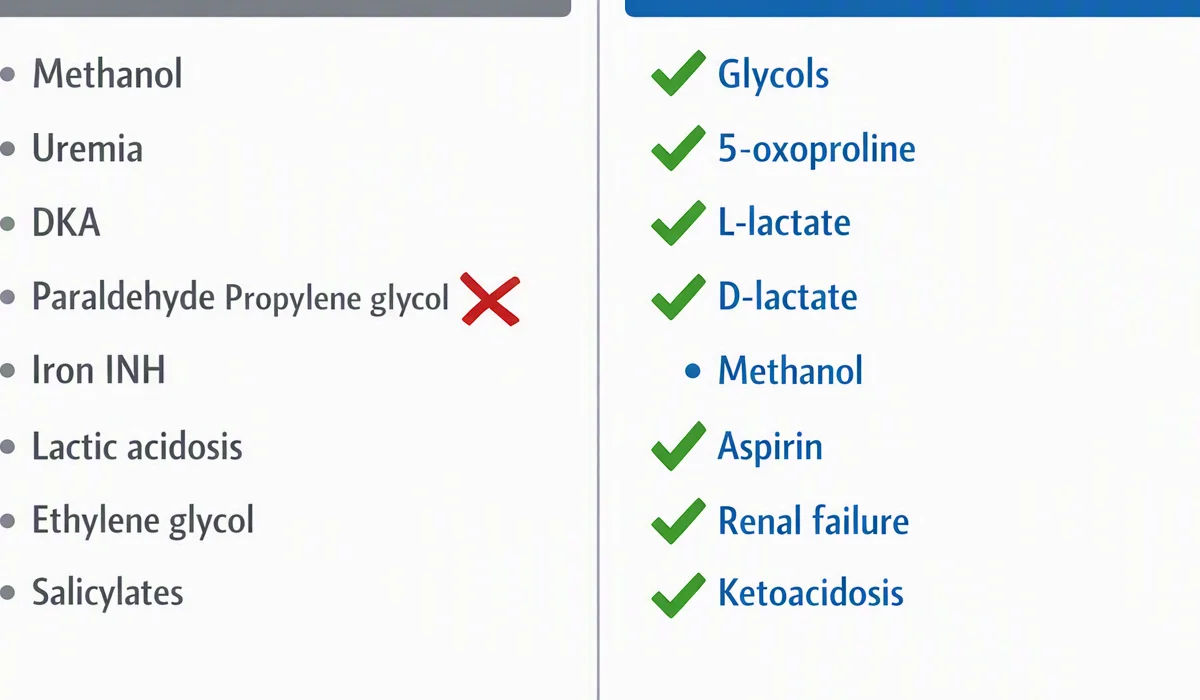
Common causes of a corrected high gap include lactic acidosis, ketoacidosis, and uremia. Lactic acidosis can occur when oxygen delivery or tissue metabolism is impaired, leading to lactate buildup. Ketoacidosis develops when ketone bodies accumulate, such as in uncontrolled diabetes, starvation, or alcohol-related states. Uremia reflects impaired kidney function and the retention of acids and other waste products.
Once albumin is accounted for, the corrected value provides a better estimate of the patient’s actual acid burden. That makes it easier to detect a dangerous process early. It also supports more accurate patient evaluation because the clinician can distinguish between a truly elevated gap and one that only appears normal because of low albumin.
In practice, the corrected result should be interpreted alongside symptoms, renal function, glucose, lactate, and ketone testing. The number alone does not make the diagnosis. It is one part of a larger acid-base puzzle that requires careful reasoning and complete laboratory review.
Frequently Asked Questions
How does low albumin affect the anion gap?
Low albumin lowers the measured anion gap because albumin is a major negatively charged unmeasured anion. When hypoalbuminemia is present, the gap may look normal even if there is underlying metabolic acidosis. That is why albumin should be considered during interpretation.
What is the formula for correcting the anion gap for albumin?
A common anion gap formula correction is: measured anion gap + 2.5 × (4.0 - serum albumin in g/dL). This gives the albumin-corrected anion gap in mEq/L. The exact correction factor may vary slightly by source, but this version is widely used in clinical practice.
Can a normal anion gap still mean metabolic acidosis?
Indeed. A normal value can still conceal metabolic acidosis when albumin is low. This is sometimes called hidden acidosis. In that case, the unadjusted gap may fall in the normal range, but the corrected value shows excess acid load or other abnormalities.
Why does hypoalbuminemia lower the measured anion gap?
Albumin provides a strong negative charge and plays a major role to the pool of unmeasured anions in plasma proteins. When albumin is reduced, fewer negative charges remain to balance cations, so the calculated gap decreases. This alters the apparent result without necessarily changing the underlying disease process.
When should an Anion Gap Calculator be adjusted for albumin?
An Anion Gap Calculator should be adjusted whenever the patient has low albumin or a condition likely to affect serum albumin. This is especially important during clinical assessment of suspected acid-base disorder, because the uncorrected value may miss the true abnormality. Adjusting for albumin improves measurement interpretation and supports better clinical decisions.